

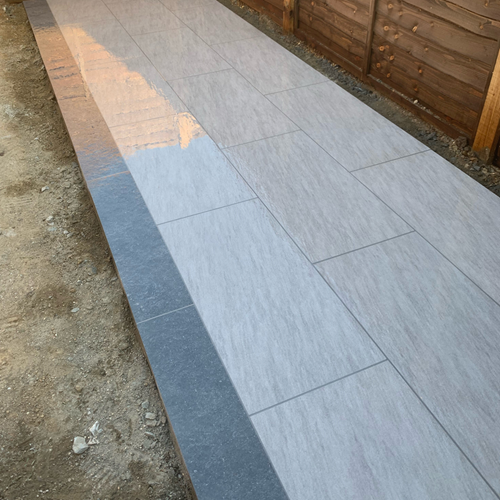


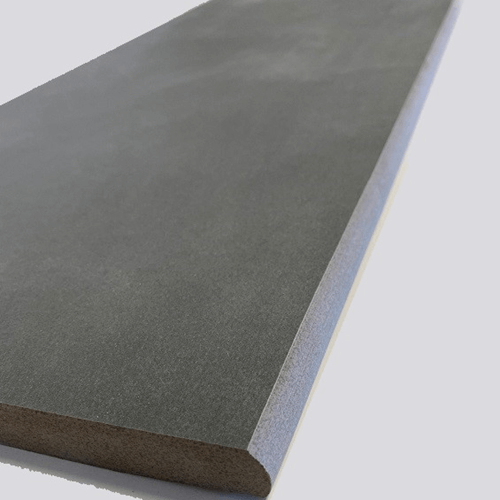
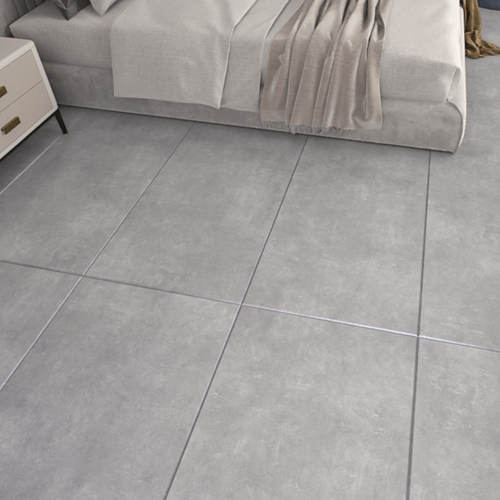




Can 20mm Thick Porcelain Pavers Be Used for Driveways?
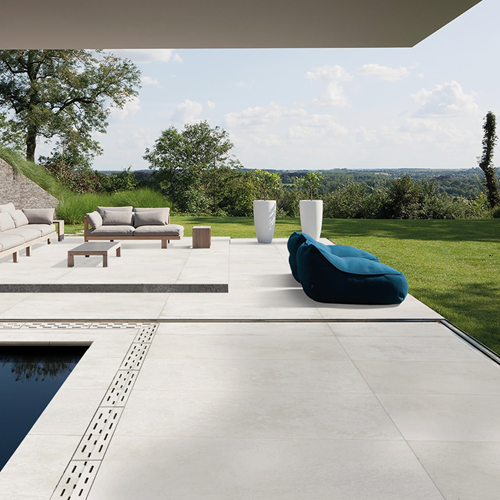
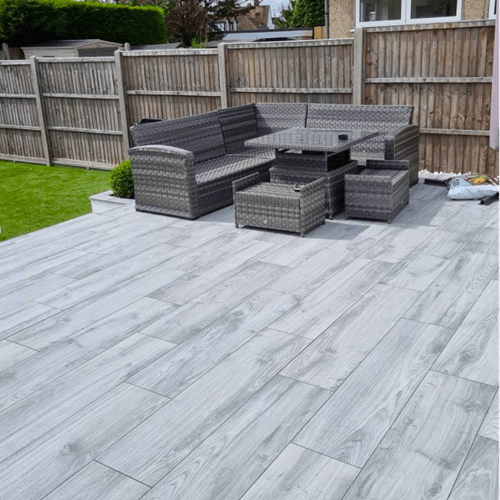
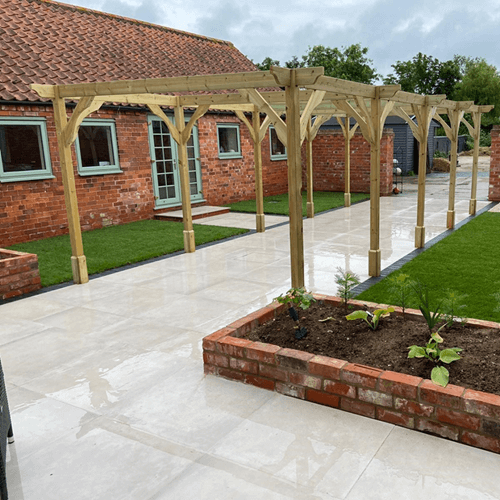
Porcelain paving has become one of the most popular choices for modern outdoor spaces in the UK thanks to its durability, low maintenance, and contemporary appearance.
However, one question homeowners often ask is:
Can 20mm thick porcelain pavers be used for driveways?
The answer is: yes — under the right conditions.
While 20mm outdoor porcelain slabs are extremely strong and suitable for patios, pathways, and garden areas, driveway installations require additional structural support and proper installation methods to handle vehicle weight safely.
In this guide, we explain when 20mm porcelain paving can be used for driveways, what installation requirements are needed, and what alternatives may be more suitable for heavier traffic areas.
Are 20mm Porcelain Pavers Strong Enough?
High-quality outdoor porcelain paving is manufactured using extremely high pressure and temperatures, creating a dense and technically strong material.
Most 20mm porcelain slabs offer:
- Exceptional load resistance
- Frost resistance for UK weather
- Low water absorption
- High stain resistance
- Long-term colour stability
This makes them ideal for:
- Patios
- Garden paths
- Outdoor dining spaces
- Terraces
- Residential landscaping projects
However, driveways introduce a completely different type of stress compared to foot traffic.
The Main Difference: Vehicle Weight
A typical patio only supports pedestrian traffic, but driveways must withstand:
- Vehicle weight
- Repeated pressure points
- Tyre movement
- Turning forces
- Potential sub-base movement
This means the installation method becomes far more important than the porcelain slab itself.
Can 20mm Porcelain Be Used on Residential Driveways?
✅ Yes — in some residential applications
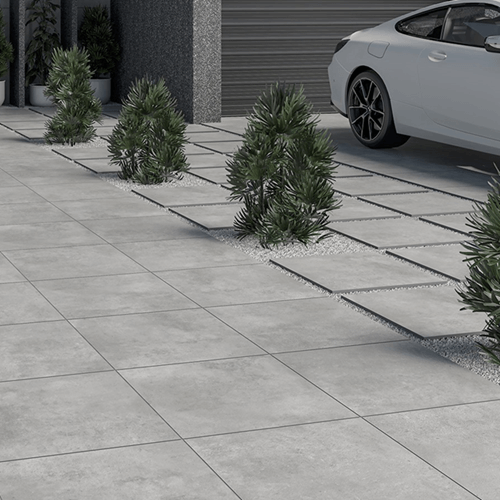
20mm porcelain paving can be used for domestic driveways when installed correctly over a reinforced sub-base and full mortar bed.
This is suitable for:
- Light vehicle use
- Residential cars
- Occasional vehicle traffic
Not recommended for:
- Heavy vehicles ( truck, trailer, ..etc )
-
Commercial parking spots
- Areas with poor sub-base preparation
Without the correct foundation, even strong porcelain slabs may crack under concentrated vehicle pressure.
Proper Installation Is Essential
If porcelain paving is being considered for a driveway, installation quality is critical.
A driveway installation typically requires:
- A properly compacted MOT Type 1 sub-base
- Reinforced concrete or stabilised base
- Full mortar bed coverage
- Correct jointing materials
- Adequate drainage and fall
👉 Simply laying porcelain slabs like a standard patio installation is not sufficient for driveway use.
Why Porcelain Is Popular for Modern Driveways
Despite the installation requirements, many homeowners choose porcelain paving for driveways because of its modern appearance and low maintenance benefits.
Porcelain offers:
- A sleek contemporary finish
- Resistance to stains and oil marks
- Very low water absorption
- Easy cleaning and maintenance
- Excellent performance in UK weather conditions
Unlike natural stone, porcelain does not require regular sealing and is highly resistant to algae and moss growth.
Porcelain vs Traditional Driveway Materials
|
Feature |
Porcelain Pavers |
Concrete Block Paving |
Natural Stone |
|
Maintenance |
Very low |
Medium |
Medium–High |
|
Stain resistance |
High |
Medium |
Low–Medium |
|
Modern appearance |
Excellent |
Standard |
Natural look |
|
Water absorption |
Very low |
Medium |
High |
|
Sealing required |
No |
Sometimes |
Usually |
Important Considerations Before Choosing Porcelain for a Driveway
Before using porcelain paving on a driveway, consider:
-
Vehicle type and weight
- Quality of sub-base preparation
- Drainage conditions
- Professional installation requirements
Our Recommendation
For most standard patios and gardens, 20mm porcelain paving is more than sufficient and offers outstanding long-term performance.
For driveways, we always recommend consulting a professional installer to ensure the correct structural base and installation system are used.
👉 Proper preparation is far more important than the slab thickness alone.
Helpful Guides
You may also find these guides useful:
- 👉 Do porcelain tiles need sealing?
- 👉 Best outdoor tiles for UK weather conditions
- 👉 Porcelain vs natural stone paving comparison
- 👉 How much does porcelain paving cost in the UK?
Explore Our Outdoor Porcelain Collection
Browse our range of premium outdoor porcelain paving slabs, designed for durability, low maintenance, and modern outdoor living in UK weather conditions.
WHY PORCELAIN TILES ARE THE BEST CHOICE FOR YOUR DRIVEWAY?
1- Strong : Porcelain tiles are more stronger, more durable and denser than natural stones, as they are produced at extremely high temperatures during the manufacturing process. Due to their superior strength, they are ideal for commercial areas, patios and driveways with high foot traffic.
2- Frost Proof: They are also resistant to minus temperatures(-35 C) during winter.
3- Exceptional Stain Resistance: Utra-Low water absorption rate provides Exceptional Stain Resistance (which means Minimal Maintenance). Unlike natural stone paving, porcelain tiles do not need to be sealed and can be easily cleaned.
4- R-11 Anti Slip Rating : Porcelain pavers are perfect for British weather. It maintains it's anti-slip properties even under harsh conditions.
5- Long-lasting use :Porcelain tiles with improved durability can be used for many years without compromising their technical and visual properties.
6- Scratch resistant : Porcelain tiles are also resistant to abrasions and relatively scratches.
7- Impervious :Porcelain tiles are highly resistant to staining as well as algae and mold growth.
8- Fade resistant - The color of the tiles will remain unchanged no matter how much sunlight they are exposed to.
9- Rectified : For straight edges and even thickness,
10- Lower cost : It is often more affordable compared to natural stones. Since it will remain durable and beautiful for many years, it will cost even less as it does not require maintenance.
FAQ
Can 20mm porcelain paving hold car weight?
Yes, in residential applications when installed over a properly reinforced sub-base.
Is porcelain paving suitable for heavy vehicles?
Generally, 20mm porcelain is not recommended for heavy commercial traffic or large vehicles without specialist installation systems.
Does porcelain paving crack easily on driveways?
Not when installed correctly. Most failures are caused by poor sub-base preparation rather than the porcelain itself.
Do driveway porcelain slabs need sealing?
No, porcelain paving is non-porous and does not require sealing.


